
Can the Entertainment Experience Ever Be Halal?
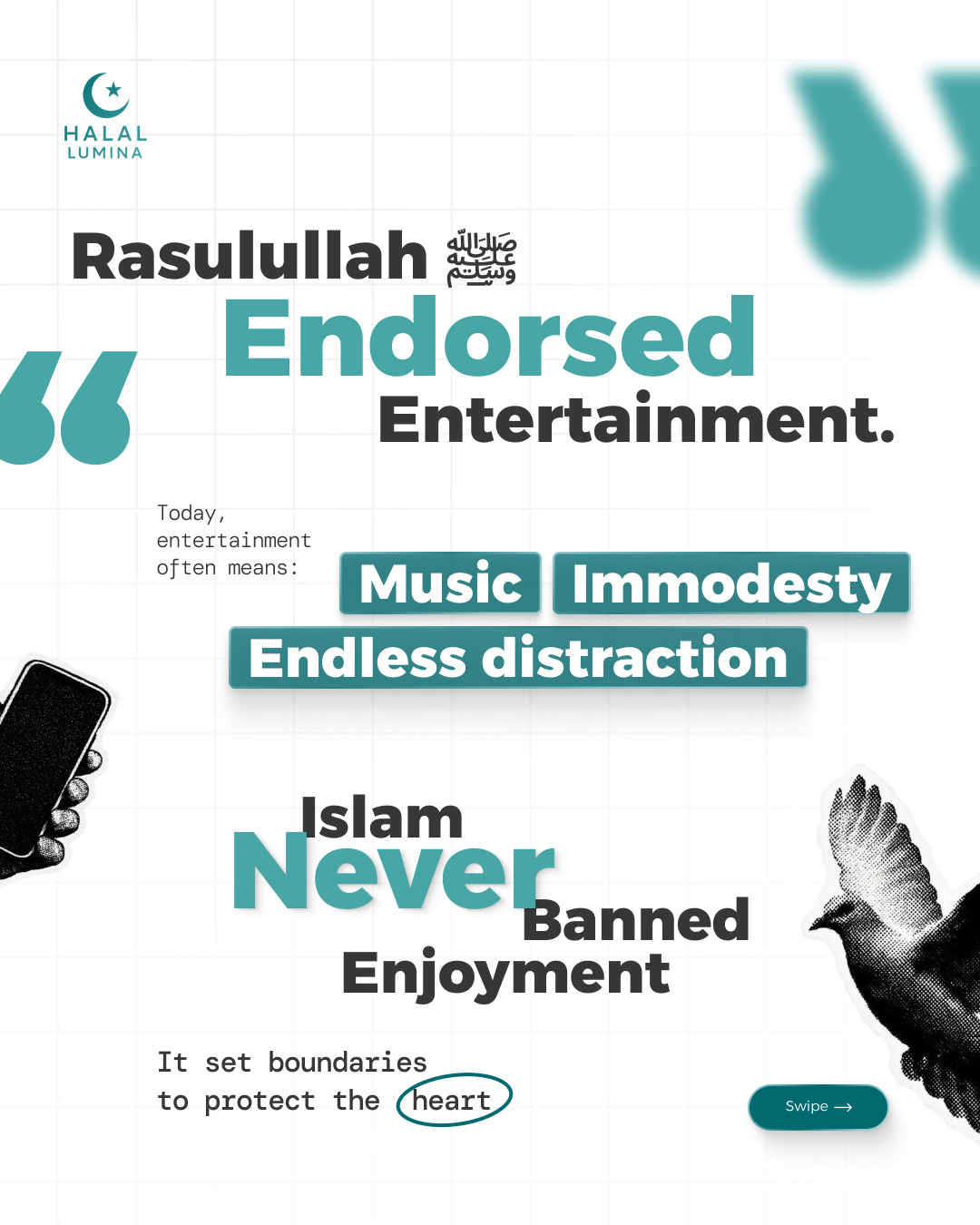
Islam never prohibited entertainment. It prohibited what corrupts the heart and compromises faith. Discover why halal entertainment is possible and why Muslims deserve better alternatives.

The Question Nobody Dares Answer Honestly
Every Muslim has felt it. That quiet discomfort when a film goes somewhere it shouldn't. That moment of hesitation before pressing play. That low-level guilt that follows an evening of scrolling through content that leaves you emptier than when you started. Most people learn to suppress that feeling. They convince themselves the compromise is small, the content is mostly fine, and that this is simply the world they live in. But the feeling doesn't go away. Because the question underneath it never gets answered. Not whether this specific show is acceptable — but something deeper. Can entertainment, as an experience, ever truly be Halal?
The World Muslims Are Living In
Open any major streaming platform today. Music scores every scene. Immodesty is not the exception — it is the default visual language of modern storytelling. Storylines are constructed to normalize what Islam categorizes as harm, and the sheer volume of content available means that a person can spend hours consuming it without ever consciously choosing anything. The modern media industry was not designed with the Muslim in mind. It was designed around attention — and attention is most easily captured through stimulation, provocation, and content engineered to lower the viewer's guard one scene at a time. For Muslims navigating this landscape, the choice has always felt binary. Participate and compromise. Or disengage and fall behind. Most people, quietly and gradually, choose participation. Not because they stopped caring about their values — but because nothing around them made it easy to honor them.
What the Prophet ﷺ Actually Showed Us
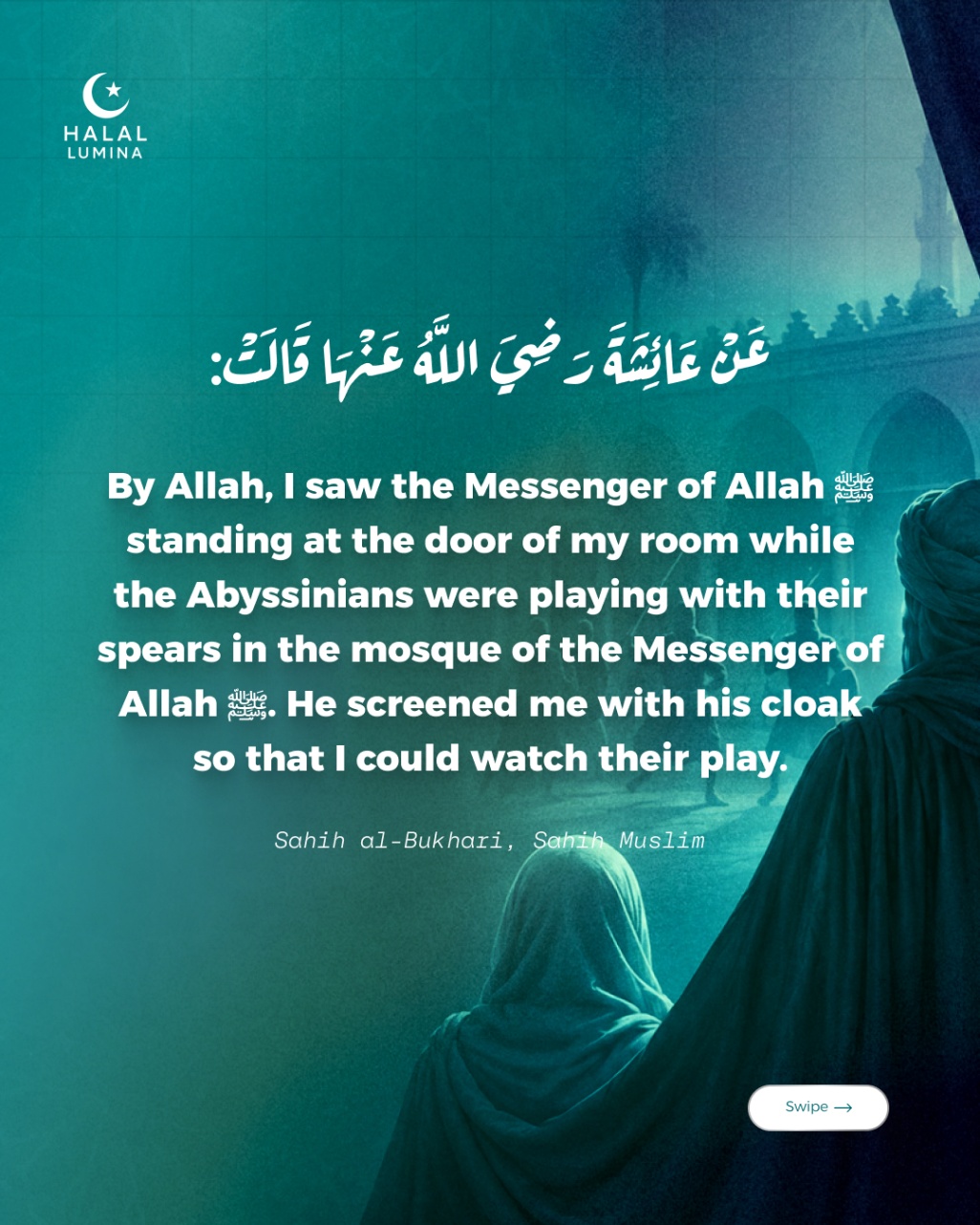
The answer was never buried in ambiguity. Aisha (رضي الله عنها) narrated that she watched the Abyssinians perform with their spears inside the mosque of the Messenger of Allah ﷺ — and that he stood at the door of her room, holding his cloak around her so she could watch comfortably. He did not turn away. He did not rebuke. He stood there, present, and allowed the experience to unfold. This narration is preserved in both Sahih al-Bukhari and Sahih Muslim — the highest level of hadith authentication available. It is not a minor footnote. It is a statement of principle. The Prophet ﷺ did not prohibit enjoyment. He protected it. He demonstrated what entertainment looks like when it is experienced within boundaries that preserve the heart, rather than slowly erode it.
The Mechanics of Slow Corruption
The most dangerous feature of modern entertainment is not its worst content. It is its average content. A single film containing something explicit is identifiable — a Muslim can recognize it and walk away. But a generation of content that incrementally normalizes immodesty, trivializes commitment, and treats faith as eccentricity operates below the threshold of conscious detection. It does not announce itself. It simply accumulates. Music is the clearest example of this. Many Muslims who would never touch alcohol, never miss a prayer, and would be visibly offended by public immodesty stream music without a second thought. This is not the result of scholarship. It is the result of habituation. Selective obedience is not the same as informed disagreement. The boundary did not move. The comfort with crossing it did — quietly, gradually, one playlist at a time — until the line that once existed simply disappeared.
What the Alternative Actually Looks Like
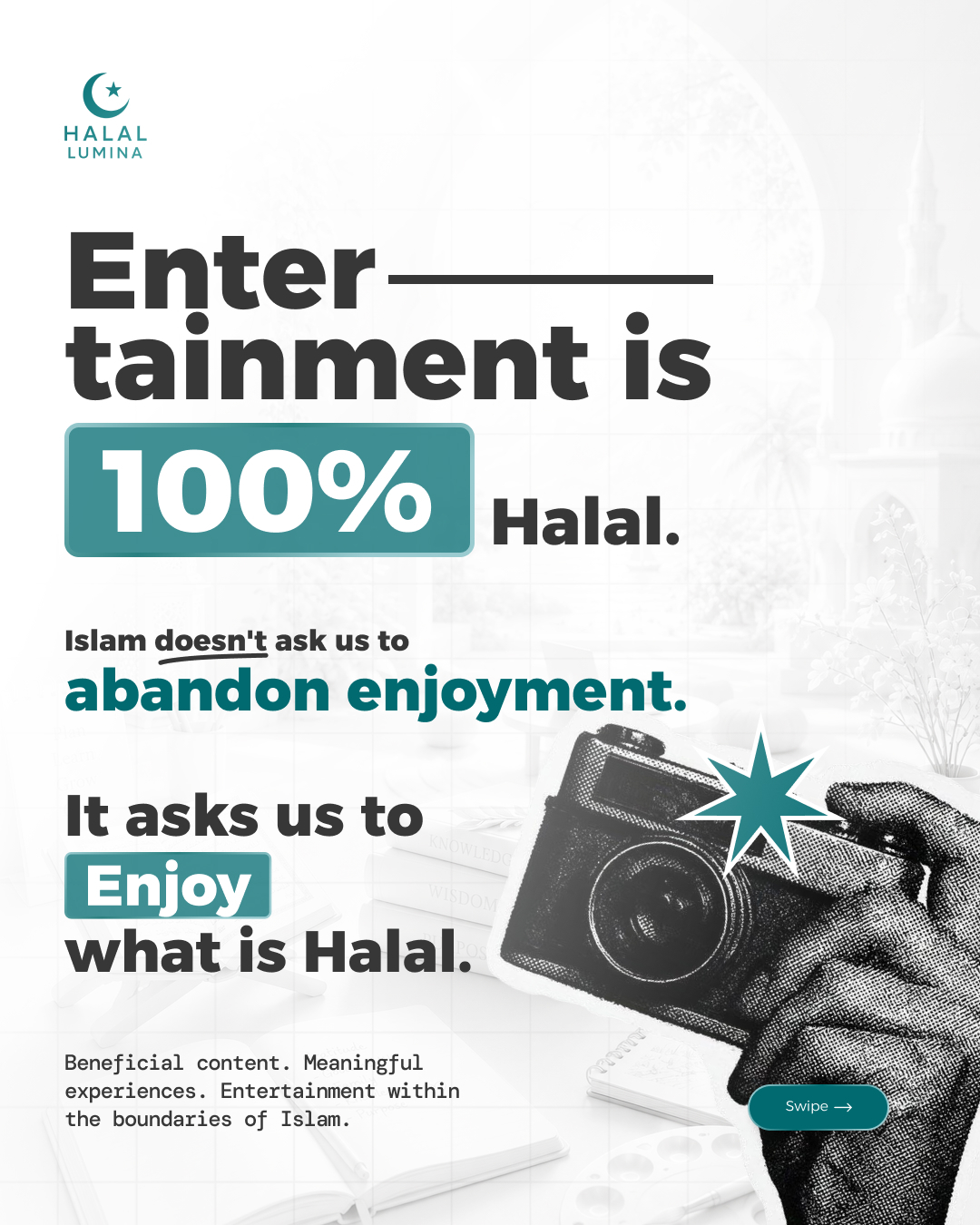
Islam's own tradition is inseparable from storytelling. The Quran presents the stories of the Prophets with dramatic tension, vivid character, consequence, and emotional depth. Centuries of Islamic scholarship were communicated through poetry, allegory, and oral narrative. The tools of storytelling are not un-Islamic. What matters is what those tools carry. Halal entertainment is not lesser entertainment. It is entertainment built on different foundations — stories that reveal truth honestly, documentaries that inform without deceiving, films that move people without requiring them to compromise what they believe in order to feel something. The heart can still be stirred. The experience can still be powerful. The audience can still be moved, surprised, and left with something meaningful. None of that requires a single scene that contradicts the values of the person watching.
Why Halal Lumina Exists
The Muslim world does not have a desire problem. Muslims want great content. They want to be moved, informed, and genuinely entertained. They want stories that reflect something real about the human experience. What is missing is not the appetite — it is the infrastructure. Halal Lumina was built on a single conviction: the choice Muslims have been handed for decades — between quality and values — is a false one. Excellence and obedience are not opposites. A documentary can be cinematic. A story can be gripping. A film can move people to tears and leave them closer to Allah when it ends. That is not an impossible standard. It is the only standard worth building toward. No music. No immodesty. No compromise — not as restrictions imposed from outside, but as design principles chosen from within.
The Future Is Not Avoidance
The Prophet ﷺ did not tell Aisha to look away. He stood at the door and shielded her so she could watch. That is not a story about restriction. It is a story about protection — about what it looks like when enjoyment is bounded by care rather than abandoned out of suspicion. The future of Muslim media is not a generation that learns to live without entertainment. It is a generation that finally has entertainment worthy of them. That future is being built. And it begins with refusing to accept that the choice between excellence and obedience ever needed to exist.
Halal Lumina —Where Islamic Values Meet World Class Media