
Generations Raised by Algorithms
Every swipe teaches the algorithm something new about you. But the algorithm was never designed to help you grow. It was designed to keep you watching. And an entire generation is being shaped by that distinction.
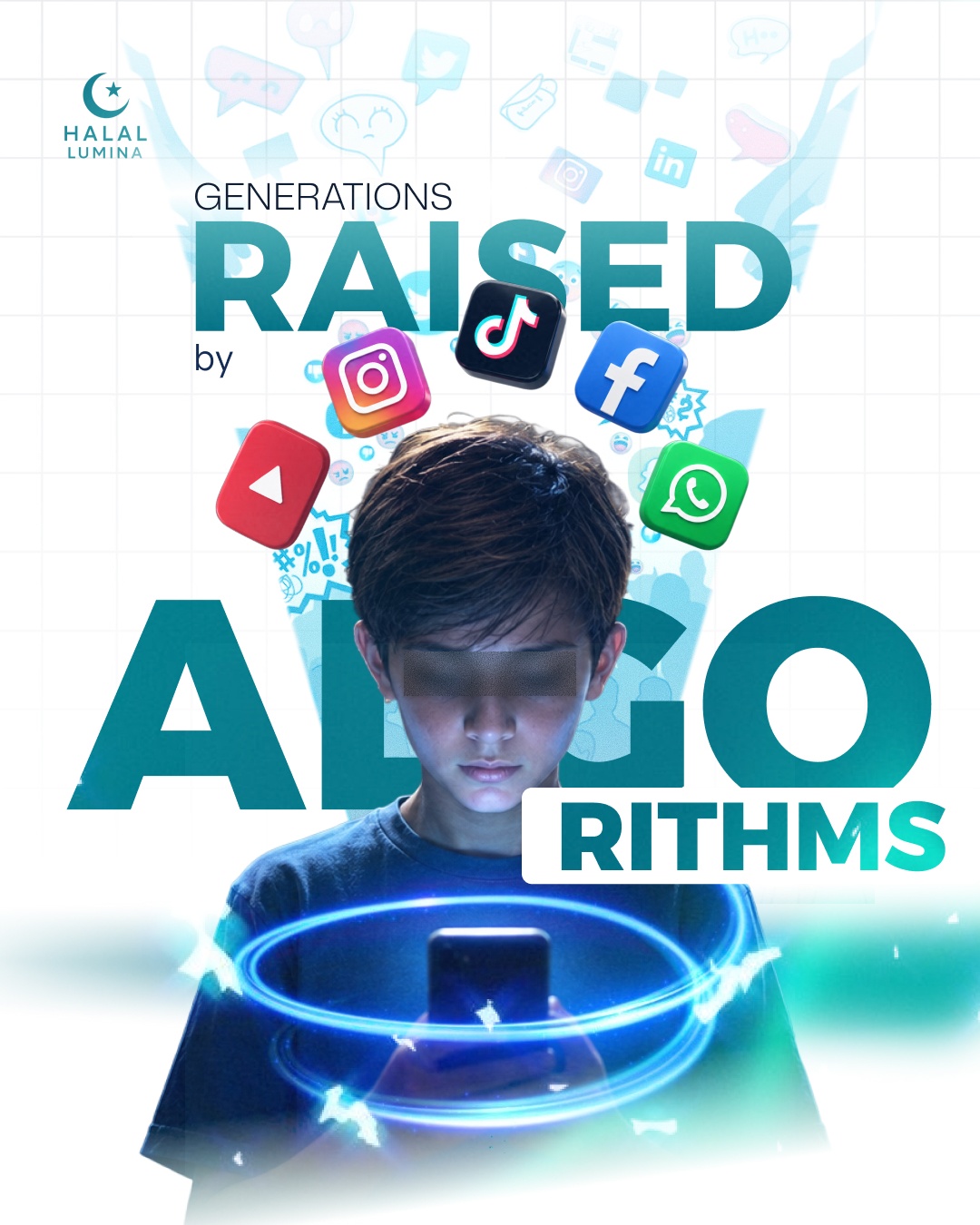
The Most Influential Educator of This Generation Has No Name
It does not have a face. It has never met your child. It does not know their name, their struggles, their dreams, or what they need to become. But it knows — with extraordinary precision — what keeps them watching. It knows what makes them swipe again. It knows exactly how to hold their attention for one more minute, and then another, and then another after that. The algorithm is the most powerful educator this generation has ever encountered. It reaches them earlier, holds them longer, and shapes them more consistently than any school, any book, or in many cases, any parent. And nobody elected it. Nobody asked whether it shared our values. It simply arrived — and we handed it our children.
What Is Actually Happening
Children and teenagers today spend more hours consuming algorithmically curated content than they spend in formal education. In every one of those hours, the algorithm is working — not to develop them, not to inspire them, not to build the character or deepen the faith or prepare the young person for the weight of adult life ahead. Its singular objective is engagement. Keep the user on the platform. Extend the session. Maximise the return visit. Everything else — what the content teaches, what values it normalises, what vision of human life it quietly sells — is secondary to that goal. The damage does not announce itself. A child does not wake up one morning and decide that attention spans are overrated, that modesty is old-fashioned, or that purpose is less interesting than entertainment. These conclusions arrive gradually, through repetition, through exposure, through the slow normalisation of a particular vision of what life is for. The algorithm does not teach values directly. It teaches through volume. And right now, it is teaching an entire generation around the clock.
What Islam Tells Us About Shaping the Mind
Islam has always understood that what enters the heart shapes the person. Allah says in the Quran: "Indeed, the hearing, the sight, and the heart — about all of these one will be questioned." (Al-Isra: 36) The eyes, the ears, and the heart are not passive receivers. They are accountable. What a person feeds them — consistently, daily, over years — becomes the architecture of who they are. The Prophet ﷺ warned against environments that corrupt gradually, not only actions that corrupt immediately. The slow erosion was always considered the more dangerous kind. An algorithm that feeds a child ten thousand hours of distraction, vanity, and moral ambiguity over the course of their upbringing is not a neutral tool. It is an environment. And Islam has always asked its people to take their environments seriously.
The Deeper Consequence Nobody Talks About
The most acute damage is not to attention spans or screen time statistics. It is to the Muslim imagination. A generation raised on algorithmically curated content does not simply develop poor media habits — it develops a distorted picture of what human life is supposed to look like. What success looks like. What relationships look like. What the body should look like. What is worth desiring, pursuing, and spending a life on. These are not abstract concerns. They are the foundations of identity. And when those foundations are being poured by systems built for profit rather than purpose, the result is a generation that is simultaneously overstimulated and deeply undernourished — connected to everything and rooted in nothing. The algorithm was not designed to harm Muslims specifically. But it was designed without any consideration of what Muslims need. And in a landscape where neutrality does not exist, that absence is its own kind of harm.
Technology Is Not the Enemy
Islam is not a tradition of retreat. Muslims built the libraries that preserved human knowledge during Europe's dark ages. Muslim scholars were astronomers, physicians, mathematicians, and architects. The tradition has never been to fear tools — it has been to ask who controls them, for what purpose, and toward what end. Technology itself is neutral. A camera can document injustice or manufacture it. A platform can spread knowledge or accelerate ignorance. A recommendation engine can guide a young person toward what will genuinely benefit them — or toward what will keep them scrolling until midnight. The question has never been whether to engage with the tools. The question is who shapes the principles behind them. Because technology does not operate in a values vacuum. It reflects the values of whoever built it. And right now, the systems shaping an entire generation were built by people whose primary metric of success is time-on-platform — not the character of the person sitting in front of the screen.
What Halal Lumina Is Building
Halal Lumina was founded on a refusal to accept that the digital world belongs to someone else. Media, technology, and content systems are not neutral infrastructure that Muslims simply consume. They are environments — and environments shape belief, identity, attention, and behavior. If those environments are built without Islamic principles, they will work against them by default. The vision is not to build an Islamic version of what already exists. It is to build something that operates from completely different assumptions — that the purpose of content is not engagement for its own sake, but growth, truth, and genuine benefit. That a young Muslim deserves a digital environment that strengthens their faith rather than quietly eroding it. That world-class media and Islamic values are not a contradiction, but a combination the world has simply never been offered before. That is what is being built.
The Generation That Is Still Being Shaped
The next generation has not been lost. They are still being formed. Their values are still being written. Their understanding of what life is for is still, at this moment, in motion. The algorithm will continue to compete for that formation. It will get faster, more personalised, and more persuasive with every passing year. The response to that is not panic — it is presence. It is building alternatives that are genuinely better. Not just safer, but more compelling, more meaningful, and more worthy of the time of a generation that deserves far more than endless scrolling. The next generation does not just need smarter algorithms. It needs people who care deeply about what those algorithms are building them into.
Halal Lumina — Where Islamic Values Meet World Class Media